 Tasaheel ERP
Budgeting and Budget vs Actual: A Practical Guide
How to build a monthly budget and compare it with actuals: fill methods, variances, a fair comparison on complete months, and budget control that blocks overspending.
 By Sherif Fadl — Founder, Tasaheel ERP
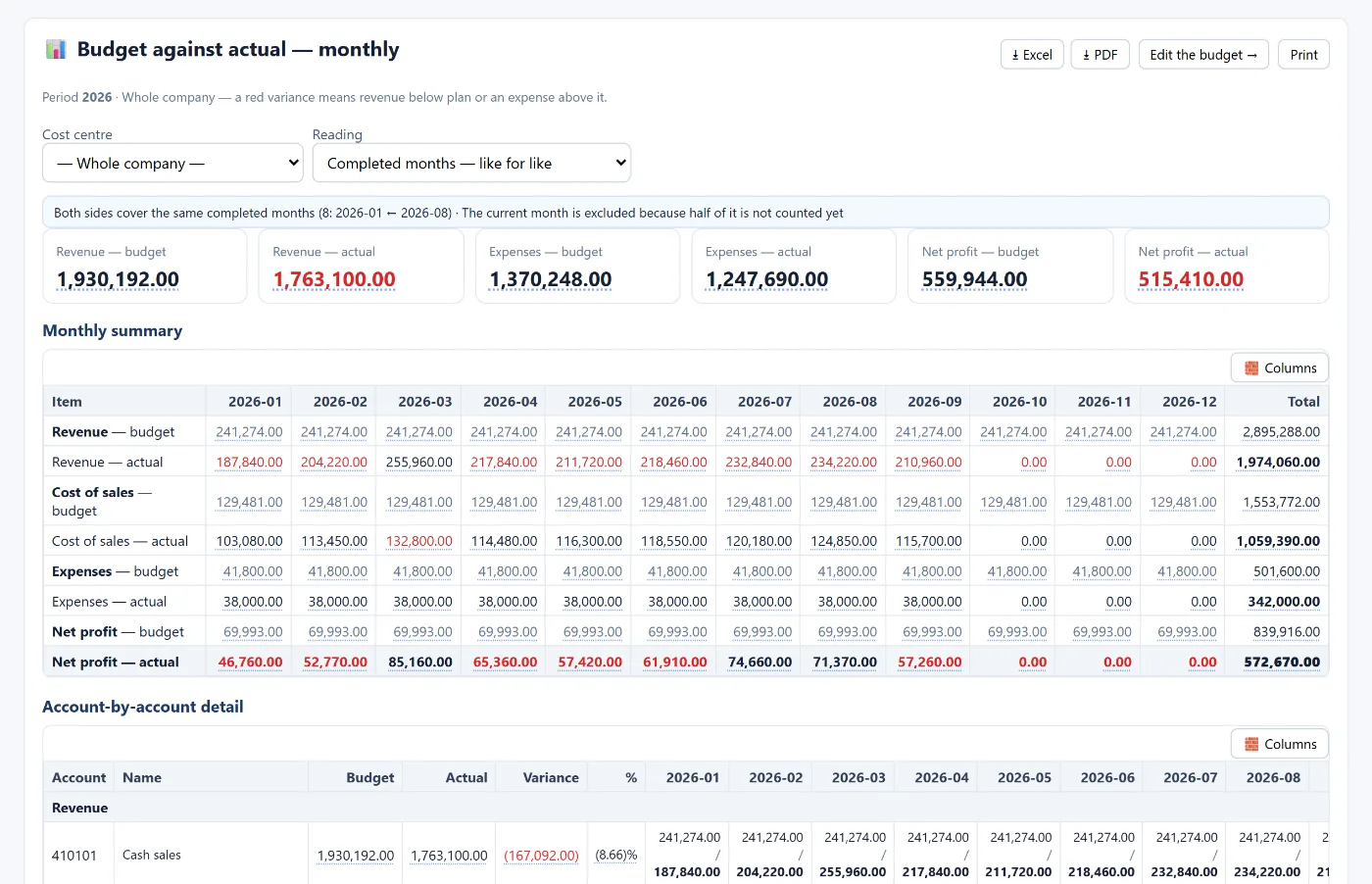
A budget is not a figure written at the start of the year and forgotten. Its real value is in the monthly comparison with actuals: where did we overspend? Where did revenue fall short? And why? This guide explains how to build one practically and how to read its variances.
Where to start
Three common ways to build each account's budget:
- An annual amount spread evenly over the months — suits fixed costs such as rent.
- From actuals to date with a growth rate — estimating the year from real performance.
- An annual total spread by last year's seasonality — suits seasonal businesses such as restaurants and retail.
In every case start with revenue, then cost of sales, then expenses, so expected net profit is a result, not an imposed figure.
Reading variances
- Actual revenue below budget: review volumes, prices and customers.
- Actual expense above budget: is it permanent (a price rose) or one-off (emergency repairs)?
- The variance percentage matters more than the amount: 20% on a small expense can be more serious than 5% on a large one.
A fair comparison
Compare complete months only. If you compare a half-finished current month with its full budget, everything looks below plan. And compare the same period on both sides.
Budget control
A budget can be a control tool, not just a report: when control is on, any expense on an account with a budget is compared with what is available (budget − spent), and if it exceeds that, the system blocks or warns.
How Tasaheel Accounts manages budgets
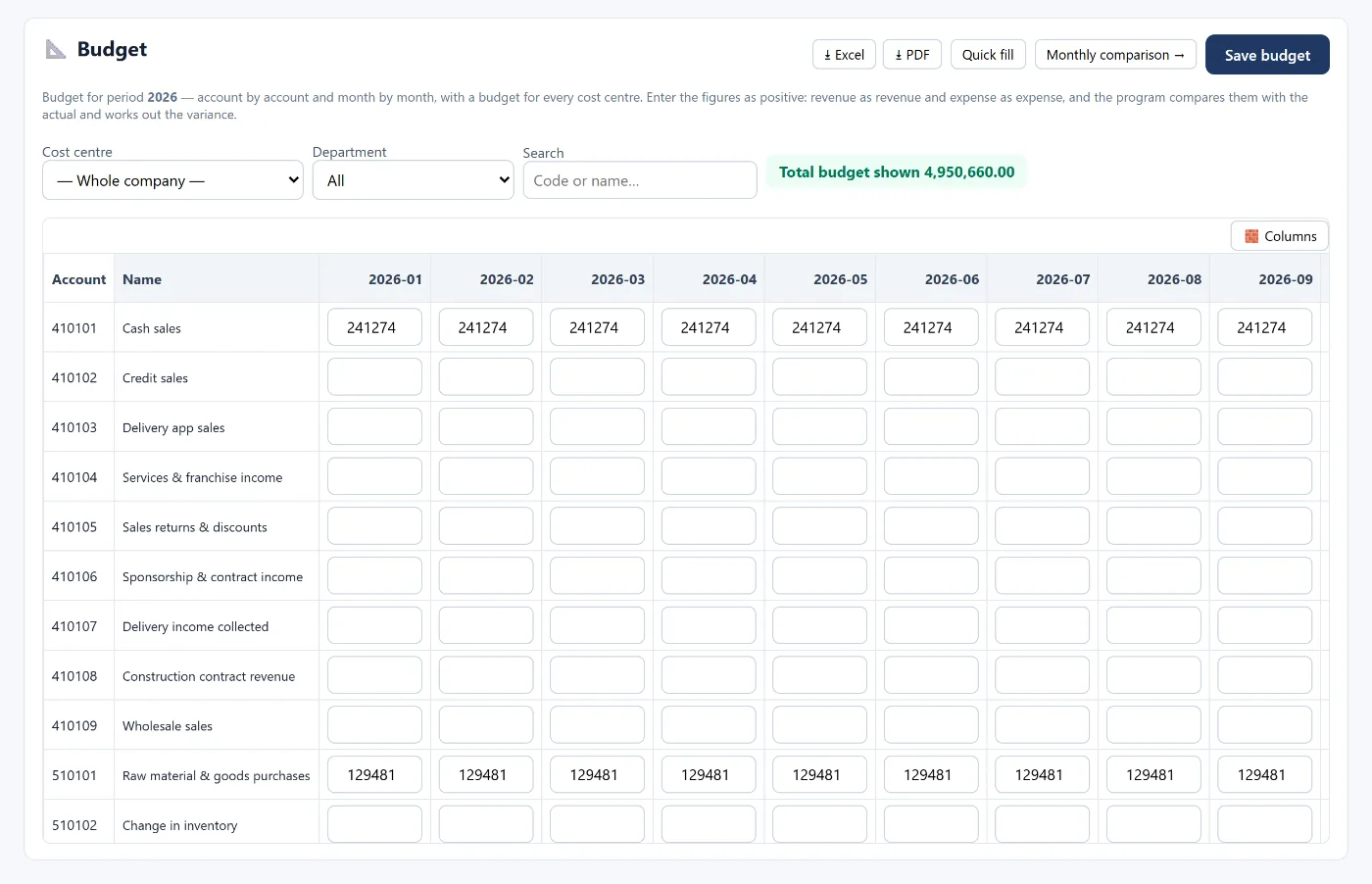
- The budget: account by account and month by month, with a budget per cost centre, and a quick fill using the three methods above plus a growth rate.
- Budget vs actual — monthly: revenue, cost, expenses and net profit, budget and actual for each month, with a fair comparison on complete months, variance and its percentage, and detail per account. A red variance means revenue below plan or an expense above it.
- Budget control: block or warn when the available amount is exceeded.
FAQ
Are budgets only for large businesses?
No. A small business benefits more because its margin for error is smaller. A budget of a few lines is better than none.
How often should I review variances?
Monthly after the month is closed, revising the budget quarterly if conditions change materially.
Should I change the budget if conditions change?
Keep the original for comparison, and create an updated estimate (a forecast) for the remaining months.
Can I budget per branch?
Yes. Each cost centre has its own budget, and you can compare per centre or for the whole company.
Read also cash flow management and how to read your financial statements, or learn more about Tasaheel Accounts.
Try it in Tasaheel: create a free account, fill your year's budget with the quick fill, and compare it with actuals every month.