 Tasaheel ERP
Cash Flow Management: Forecasting and Avoiding Cash Shortfalls
How to manage your business's cash flow: profit versus cash, month-by-month forecasting, faster collection, scheduling payments, and reading the cash flow statement.
 By Sherif Fadl — Founder, Tasaheel ERP
Many profitable businesses stumble because cash ran out in the wrong month: salaries due, a loan instalment, a VAT return, and customers who have not paid yet. Managing cash flow means seeing that month before it arrives and acting early. This guide explains how.
Profit is not cash
An invoice records revenue on the day it is issued, but cash arrives on the day it is collected. You buy stock and cash leaves today, yet it only shows as an expense when sold. You repay a loan and cash leaves without being an expense. So you can be profitable while your bank balance shrinks.
Forecasting cash month by month
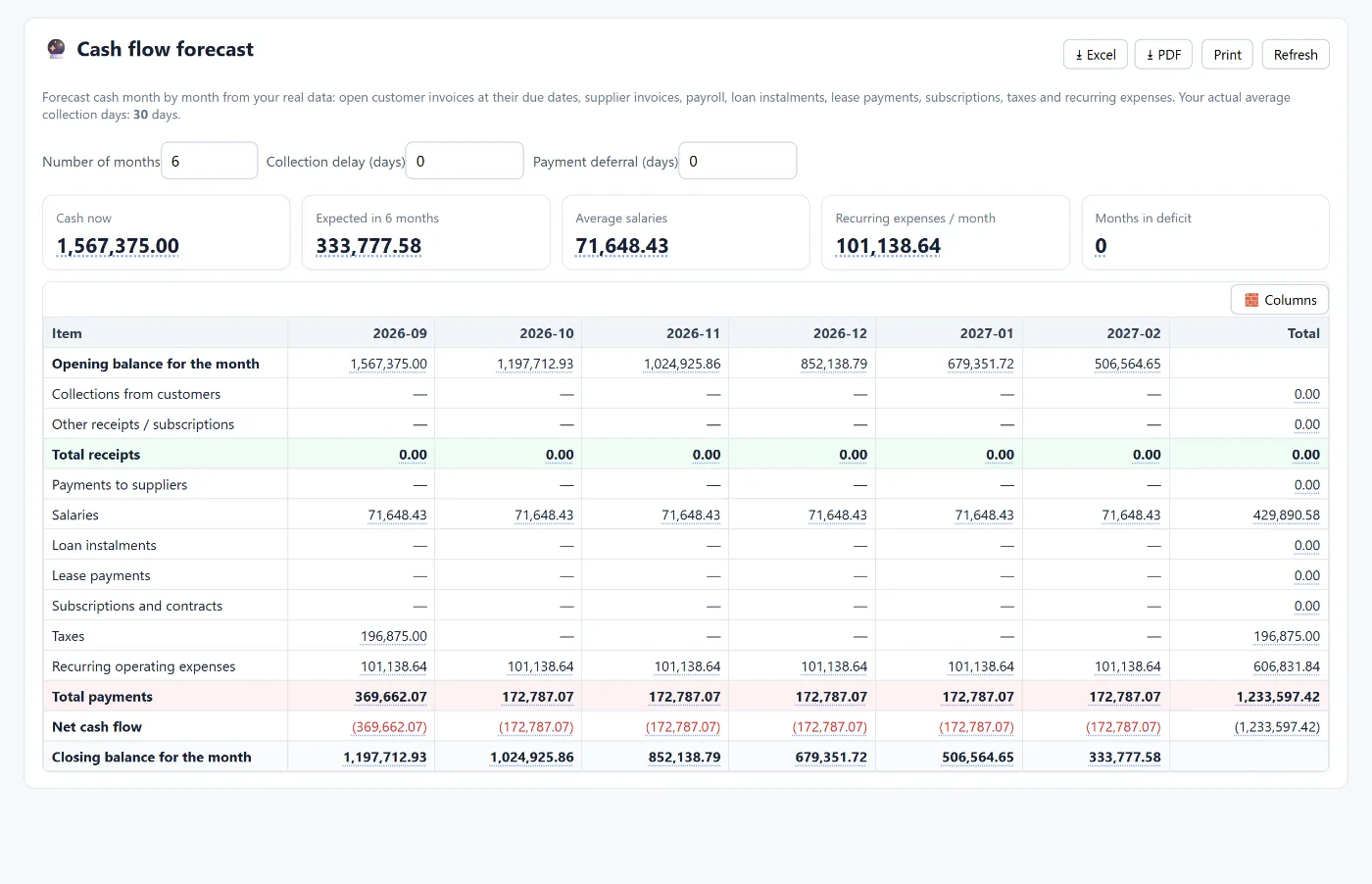
Start with the current cash balance, then add what you expect to collect and subtract what you must pay, for each month ahead:
- Receipts: open customer invoices by due date — adjusted by your actual average collection days, not just the written terms — and expected cash sales.
- Payments: supplier invoices, salaries, loan instalments, rent, subscriptions, taxes and recurring expenses.
- Closing balance = opening balance + receipts − payments.
The month whose balance approaches zero or turns negative is the month you need to act on now.
How to improve cash flow
- Collect faster: chase overdue invoices weekly, shorten terms for new customers, and ask for deposits on large orders.
- Schedule payments: pay on the due date, not before, and spread large payments across months.
- Reduce slow-moving stock: every idle item is cash locked up.
- Plan for seasons: if sales are seasonal, build cash before the season, not during it.
- Separate investing from operating: do not fund a large asset from operating cash if it will squeeze salaries.
The cash flow statement
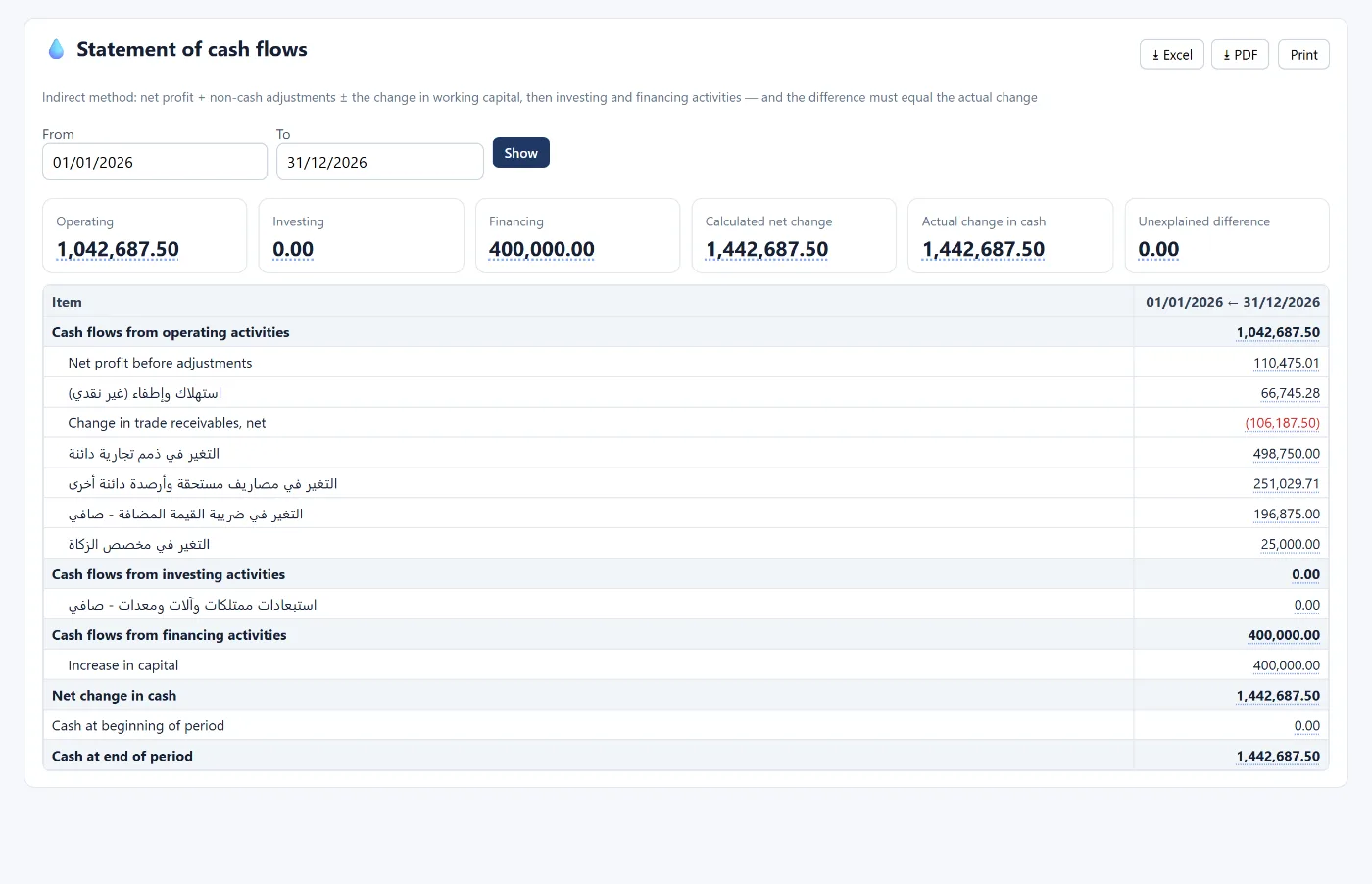
It shows where cash actually went during the period, using the indirect method: net profit + non-cash adjustments (such as depreciation) ± the change in working capital (customers, inventory, suppliers), then investing and financing activities — and the result must equal the actual change in cash. If operating cash keeps falling short of net profit, the problem is usually collection or inventory.
How Tasaheel Accounts helps
- Cash flow forecast: forecasts cash month by month from your real data: open customer invoices by due date, supplier invoices, salaries, loan instalments, rent, subscriptions, taxes and recurring expenses — using your actual average collection days.
- The cash flow statement by the indirect method, checking that the result equals the actual change in cash.
- The collections worklist of open invoices sorted by delay with payment promises.
- KPIs: liquidity, collection and payment days and the operating cycle.
FAQ
Why am I profitable but short of cash?
Usually because of uncollected credit sales, large inventory, loan repayments or asset purchases. Check the cash flow statement and collection days.
How far ahead should I forecast?
At least six months, updated monthly, and weekly in tight periods.
What are collection days?
The average time between an invoice and its collection. The fewer, the faster cash comes in.
How accurate is the forecast?
It is an estimate built on your actual data, and it gets more accurate the more promptly invoices and due dates are recorded.
Read also how to read your financial statements and bank reconciliation, or learn more about Tasaheel Accounts.
Try it in Tasaheel: create a free account, record your open invoices, and open the cash flow forecast.