 Tasaheel ERP
Trial Balance and General Ledger: Reading Them and Finding Errors
How to read the trial balance and ledger: opening, movement and closing balances, levels, cost centres, account statements, and tracing any figure back to its entries.
 By Sherif Fadl — Founder, Tasaheel ERP
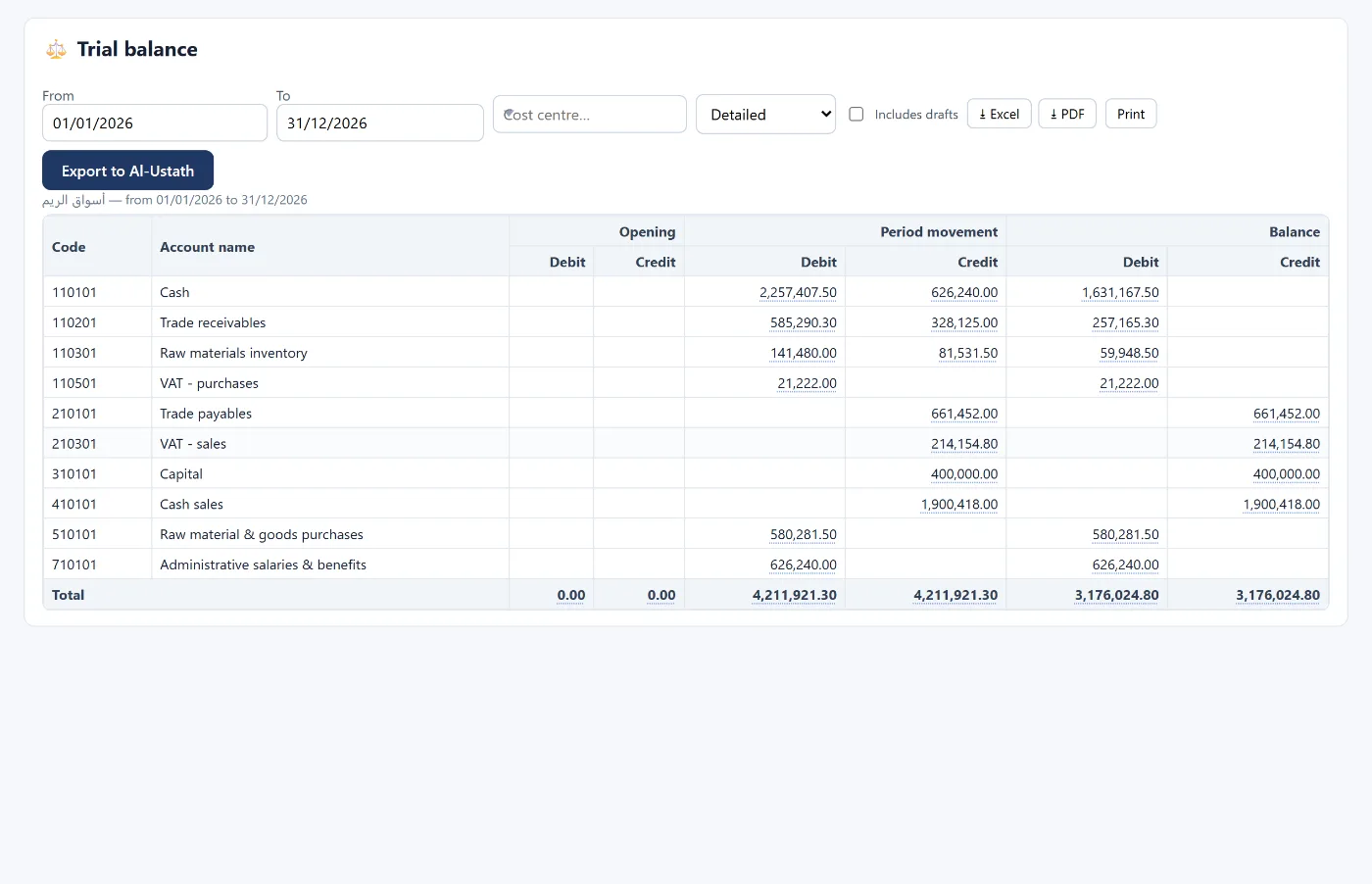
Before any financial statement, an accountant asks two questions: do the books balance? and where did this number come from? The trial balance answers the first, the general ledger the second.
The trial balance
A table of every account, each with:
- Opening — the balance at the start of the period.
- Movement — total debits and credits during it.
- Closing — where the account ended up.
Total debits = total credits in every column. If a difference appears, there is an unbalanced entry to find.
Levels
Read the trial balance in detail (every posting account) to hunt for an error, or at group or top level to see the big picture: assets, liabilities, revenue and expenses.
The general ledger (account statement)
Every movement on one account: date, document, type, description, party, cost centre, debit, credit, and the running balance after each line — with the opening balance and the period's total movement.
How to spot errors
- A balance against its nature — negative cash, or a supplier with a debit balance — often a reversed entry.
- Unexpected movement on a rarely used account.
- An amount you can't explain: trace it back to the entries behind it.
How Tasaheel Accounts manages the trial balance and ledger
- Trial balance: from and to dates, cost centre (a brand totals its branches), level (detail, group, second level or top level), with opening, movement and closing in debit and credit, the total and any difference, an option to include drafts, and export and print.
- General ledger / account statement: for any account, period and cost centre, with a running balance.
- Trace numbers: enter an account or an amount to see every entry that made up the figure and which statement line it affects.
- And from the chart of accounts and the financial statements you reach the ledger in one click.
Read also journal entries and how to read your financial statements, or learn more about Tasaheel Accounts.
FAQ
What does a difference in the trial balance mean?
An unbalanced entry or a missing opening balance — review the movements until you find it.
What is the difference between the trial balance and the ledger?
The trial balance shows every account with its balance; the ledger shows one account's movements in detail.
Can I see the trial balance for one branch?
Yes, by choosing the cost centre; a brand totals all its branches.
How do I find where a figure in the statements came from?
With "trace numbers", which shows every entry behind it.
Try it in Tasaheel: create a free account and view the trial balance for your period.