 Tasaheel ERP
Accounting for Property Sales in Instalments and Cancellations
Entries for selling a property unit with a down payment and instalments, unit cost, collections, bounced cheques, and cancelling a sale by reversal.
 By Sherif Fadl — Founder, Tasaheel ERP
Selling property units in instalments raises accounting questions an ordinary sale does not: when is revenue recorded? How is the unit's cost charged? What if a cheque bounces or the buyer withdraws? This guide answers with examples and entries, for a completed unit handed over at sale.
Off-plan sales may require revenue to be recognised over the construction period under IFRS 15, depending on the contract terms. This guide covers completed units; for off-plan sales consult your accountant.
The unit's cost before it is sold
The project cost (land + construction + other costs) is gathered in a projects under development account, then allocated to units — most commonly by area.
Example: a project costing SAR 21,500,000 with 1,450 m² of units. Cost per m² ≈ SAR 14,828, so a 140 m² flat costs ≈ SAR 2,075,862.
The sale entry with a down payment and instalments
The flat is sold for SAR 2,450,000: a down payment of SAR 490,000, and the remaining SAR 1,960,000 in 4 payments every 3 months (SAR 490,000 each).
Sale entry:
- Debit cash or bank (down payment) 490,000
- Debit buyer receivables (remainder) 1,960,000
- Credit unit sales revenue 2,450,000
Cost of the unit sold:
- Debit cost of units sold 2,075,862
- Credit completed units for sale 2,075,862
Gross profit on this flat ≈ SAR 374,138 (about 15%).
Each collection:
- Debit bank 490,000
- Credit buyer receivables 490,000
A bounced cheque: reverse, don't delete
If a cheque for a recorded payment bounces, the collection entry is not deleted but reversed with a new entry dated when it bounced:
- Debit buyer receivables 490,000
- Credit bank 490,000
The payment returns to uncollected, and both the collection and the bounce stay in the books for the auditor.
Cancelling a sale contract
If the buyer withdraws and the contract is cancelled, every entry of the contract is reversed at the cancellation date — the sale, the cost and the collections — so the unit returns to inventory, available for sale, and amounts collected are handled per the contract terms (refund or retention). One important rule: a cancellation date before the sale date is not accepted, because a reversal dated before what it reverses shows a negative balance in the period between them.
Credit sales in instalments with a margin
If the instalment price includes a margin for deferral, that margin is not sales revenue on the day of sale; it is recorded as deferred profit and recognised over the instalments, while collections settle the instalments in order.
How Tasaheel Accounts applies this
- Real estate development projects: project cost (land + construction + other) is allocated to units by area, so each unit has its cost.
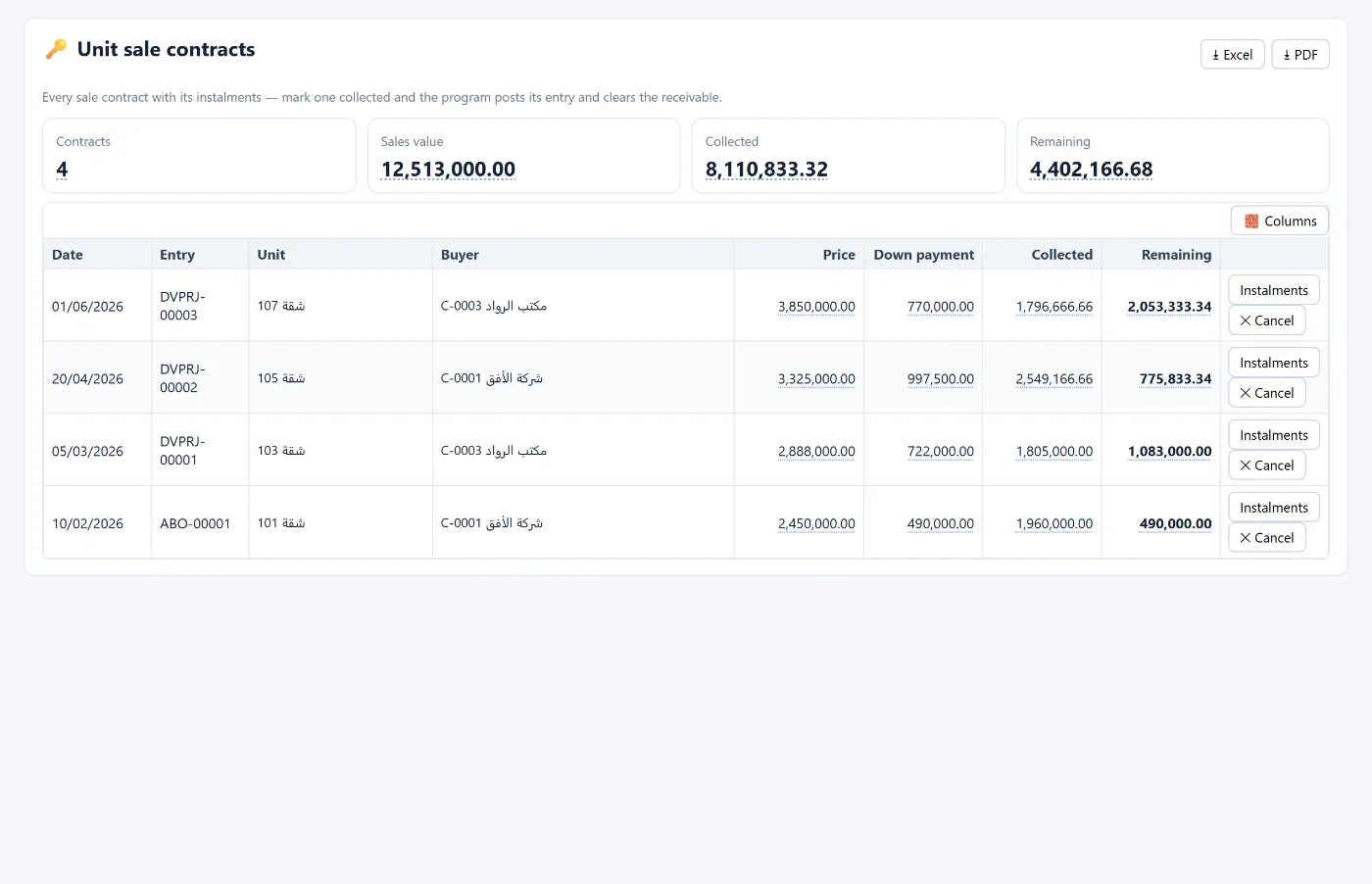
- Unit sale contracts: the sale posts the revenue, receivable and down payment and the cost entry, with a payment schedule collected at the click of a button, an undo button to reverse a collected payment, and a cancel button that reverses every entry of the contract and makes the unit available again — without deleting any posted entry.
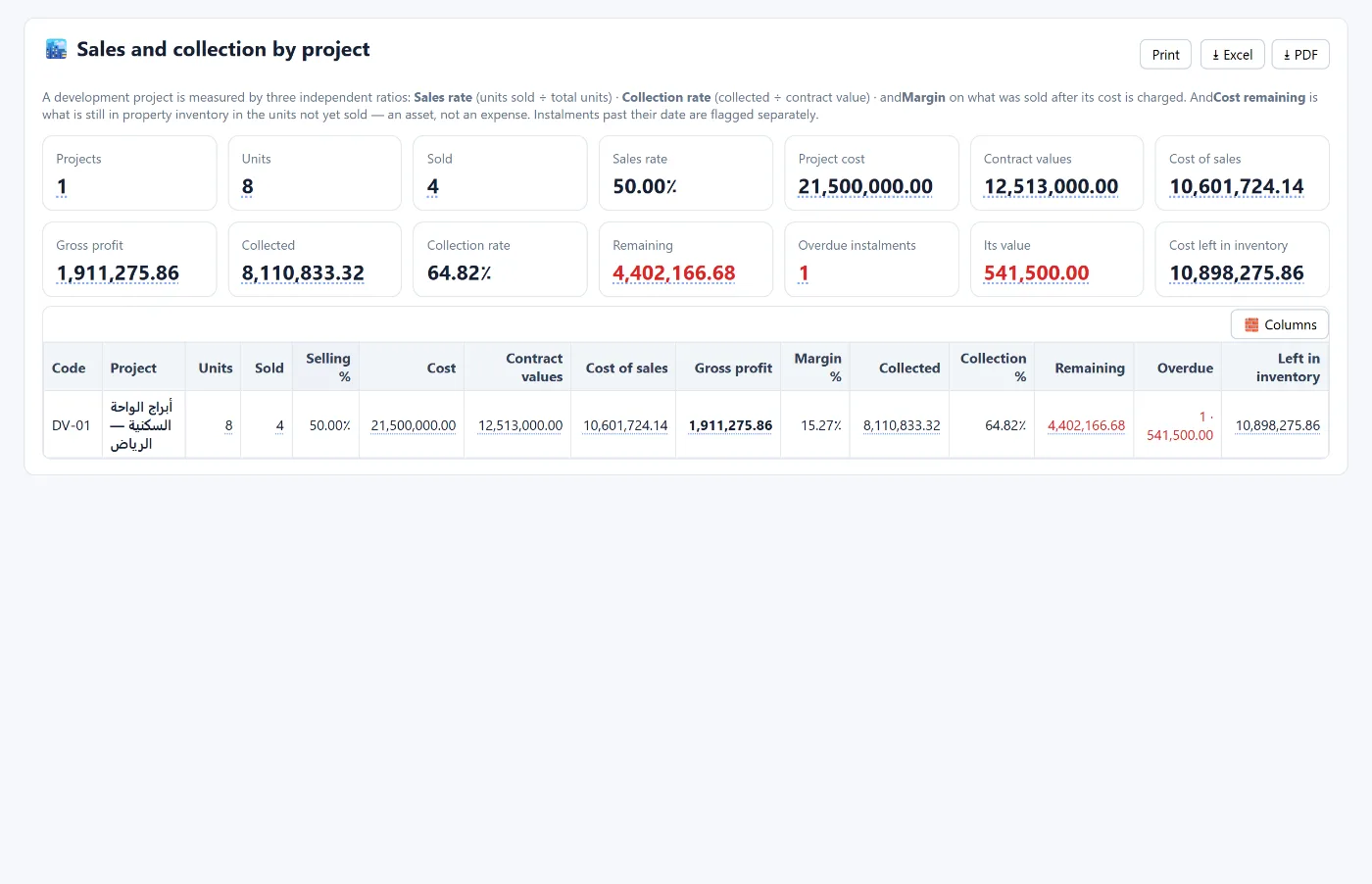
- Sales and collections by project: sales ratio, collection ratio and margin, with overdue instalments flagged automatically.
- Credit and instalment sale contracts: total with margin less the down payment, the rest in instalments, with deferred profit.
FAQ
When is revenue on a completed unit recorded?
When the unit is sold and handed over to the buyer, with the unit's cost entry on the same date.
How is the cost of a unit calculated?
By allocating the project cost to units, most commonly by area.
Do I delete the collection entry if a cheque bounces?
No. It is reversed with a new entry dated when it bounced, so the trail stays in the books.
What happens to the unit when the contract is cancelled?
The sale and cost entries are reversed, so it returns to inventory, available for sale.
Read also accounting software for real estate and bank reconciliation, or learn more about Tasaheel Accounts.
Try it in Tasaheel: create a free account, choose the real estate development activity, and record your first project and its units.